

Gold Fever
Allison Golsby
The bush has a way of settling into you long before you realise. It starts with the warmth on your shoulders; that soft steady sunshine that feels like an old friend. And the kind of balmy breeze that carries the scent of dust, eucalypts, and something older still. Out here, behind the back of a forgotten lease we had been exploring, the world feels both vast and intimate. Every footstep lands on ground shaped by hands long gone and every breath seems to stir up a memory that isn’t quite yours but somehow belongs to you anyway.
We wander slowly letting the scene set the pace. There’s not rush in the bush; there never has been. Even in the feverish days of the early diggings, when men worked the earth with a restless urgency that bordered on obsession, the land itself stayed steady. It watched. It waited. It endured.
As we walk, I find myself thinking about the sheer effort it took to build what once was here. The remnant of a small operation and nothing grand, nothing like the big mines that dominate the horizon today. Though still the bones of something meaningful. A few rusted sheets of iron, the ghost of a camp, the outline of a shaft and the scattered relics of a life lived hard.
Imagine the conversations that happened here. The arguments. The laughter. The long silences between men who were too tired to speak. Imagine the logistics; getting workers out here, hauling timber, water, food, tools and hope across a landscape that didn’t care whether you made it or not. Imagine the science of mining as it was then: part knowledge, part instinct, part bling faith. They didn’t have the technology we rely on today, but they had muscle, determination and a belief that the next swing of the pick might change everything.
And really, when you strip it back, mining has not changed all that much! The fever is still there, that hunger for discovery, the thrill of possibility, the stubbiness that keeps people digging even when the odds are stacked against them. The processes have changed. Yes… the machinery is bigger, the data is better, the safety is stronger. But the human heart? That part id the same.
We crouch down to inspect the ground. And the bush offers up its treasures in the form of rustic relics. Old lamp parts, the hand tools worn by calloused fingers, fragments of tin cups, and the unmistakeable shape of tent pegs half swallowed by the ground. Each piece tells a story of effort and ingenuity, of men who built an industry with little more than grit and stubborn hope.
I pick up a small, rusted bolt and turn it over in my hand. How many times was it tightened? How many times did it hold something together that had no right to stand in the first place? How many times did someone curse it, rely on it, or never think twice about it?
These objects are humble, but they are the foundation of everything that came after.
I picture the camp as it once was Canvas tents flapping in the wind, the heat pressing down like weight, the flies relentless, the dust everywhere. Men waking before dawn, their bodies aching, their minds fixed on the possibility of a glistening strike. The kind of determination that makes you ignore the blistering sun, the loneliness, the uncertainty.
The kind of determination that sends you into town to celebrate with a brew for that moment you find even s hint of colour in the pan.
The fever of gold does strange things to people. It blinds them. It breaks them. It drives them to places they never imagined they’d go.
And yet, standing here, I can’t help but wonder why this particular spot never kicked off again. The geology is right. The signs are here. The old-timers weren’t fools; they knew what they were looking at. So, what changed? Was it the economics? The technology? The shifting tides of fortune that move people like grains of sand across the desert.
The Goldfields has always been a place of movement. People arrive with hope in their pockets and leave with stories in their bones. Some stay forever, buried in red dirt cemeteries with tenacious headstones that lean into the wind. Others drift on, carried by opportunity or disappointment or the pull of home.
As the sun begins its slow descent, the colours of the bush shift. The reds deepen, the shadows stretch, and the air cools just enough to remind you that time is passing. We stand quietly, taking it all in; the history, the silence, the sense of being part of something bigger than ourselves.
There’s a moment, just before dusk, when the land feels alive in a different way. Not loud. Not dramatic. Just present. As if it’s acknowledging you, recognising your curiosity, your respect, your willingness to listen.
I think about the men who once stood here at this same hour, watching the same sun sink behind the same ridges. Did they feel the same pull? The same mix of exhaustion and wonder? Did they look at the horizon and think about moving on, or did they believe that tomorrow might be the day everything changed?
We often talk about the Goldfields as if it’s defined by its boom-and-bust cycles, but out here, in the quiet, you realise it’s defined by something else entirely: resilience. The resilience of the land, the resilience of the people, the resilience of the stories that refuse to fade.
As the last light slips away, we gather ourselves to leave. There’s a reluctance in our movement, a sense that we’re stepping out of a moment that won’t come again in quite the same way. But that’s the nature of wandering in the bush. You’re always arriving and leaving at the same time.
Walking back toward the vehicle, I glance over my shoulder one last time. The relics, the shaft, the scattered memories and they’re still there, waiting for the next curious soul to stumble across them. Waiting to remind someone else that history isn’t just something you read in books.
It’s something you feel under your boots, something you breathe in, something that lingers long after the people who made it are gone.
And as we drive away, the bush fades into twilight, but the story stays with us, it’s a quiet reminder of the muscle, the determination, the fever, and the humanity that built this place. A reminder that we, too, are part of the ongoing movement of this land, shaped by it, connected to it, and humbled by the lives that came before us.
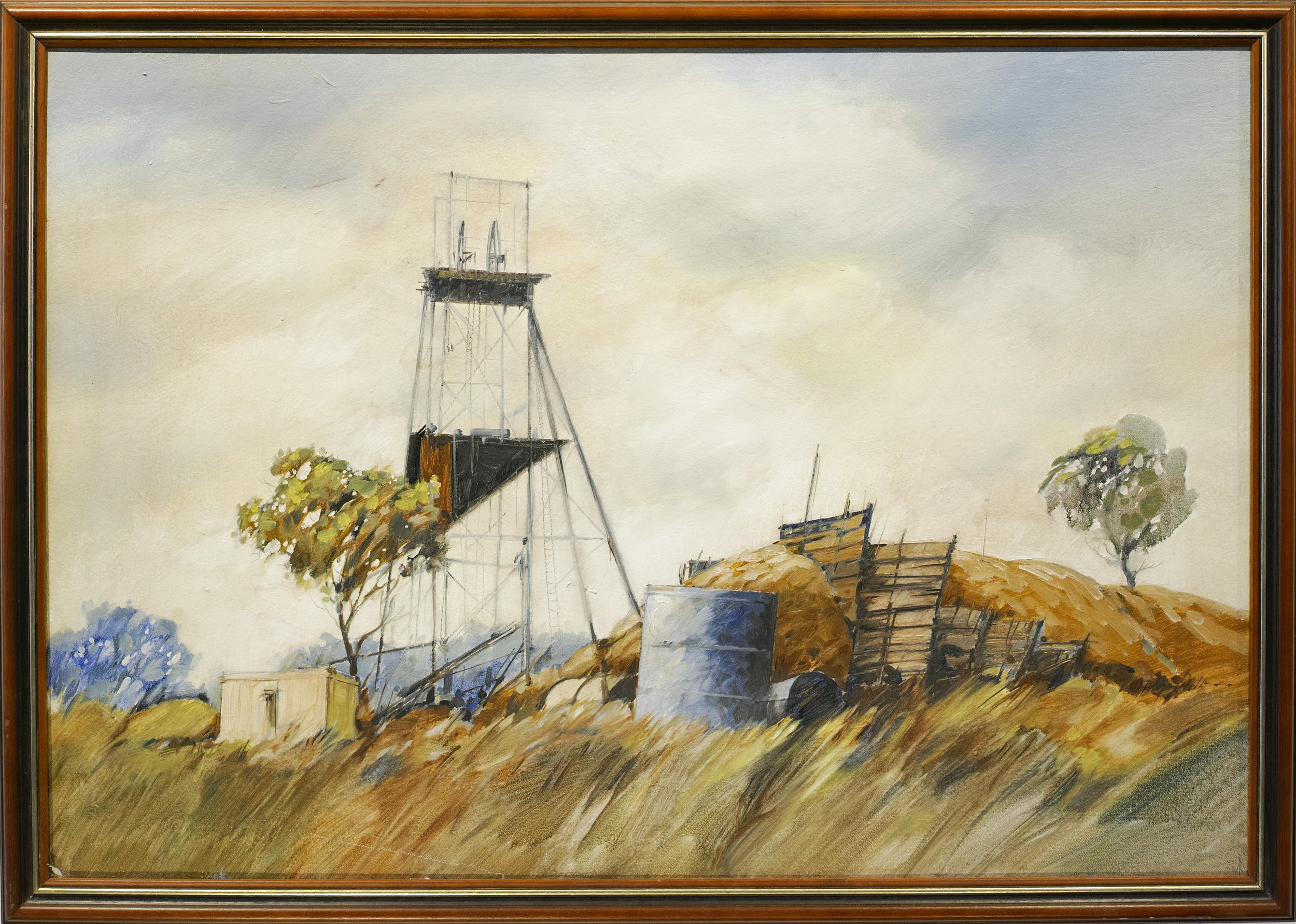
Headframe
David Thornton
This picture captures the unseen labour that built a mining world. Every conversation, every tool lifted, every muscle straining toward the promise of gold. The fever that once drove people here still lingers in the rusted relics scattered across the ground, reminders of heat, grit, and determination. You can almost hear the celebrations after a strike. Yet the place sits quiet now, its energy spent. It makes you wonder why the rush ended, how people moved on like shifting sand, and why you feel that same pull to move forward yourself.
Allison Golsby is an Australian mining engineer, governance specialist, and regional advocate with more than 30 years’ experience in high‑risk, high‑complexity industries. CEO of ConsultMine and owner of Allora House Kalgoorlie and Good as Gold Tours, she blends technical depth with community leadership. Allison also celebrates the Goldfields through creative storytelling and photography, capturing the region’s heritage, landscapes, and people. She is known for shaping safer workplaces, strengthening regional identity, and championing industry standards across Australia.